Charge, argue, and defend digital evidence with confidence. No technical background required.
Download the course overview (PDF)Nearly every case file now includes digital evidence: a phone extraction, doorbell video, location records. DFE-101 gives prosecutors and their teams plain-language command of that evidence, the legal frameworks that govern its collection (Fourth Amendment, ECPA, SCA, and Carpenter), and how it is authenticated and challenged under Daubert and Frye. It is hands-on, built around real-world cases, and assumes no prior forensics experience.
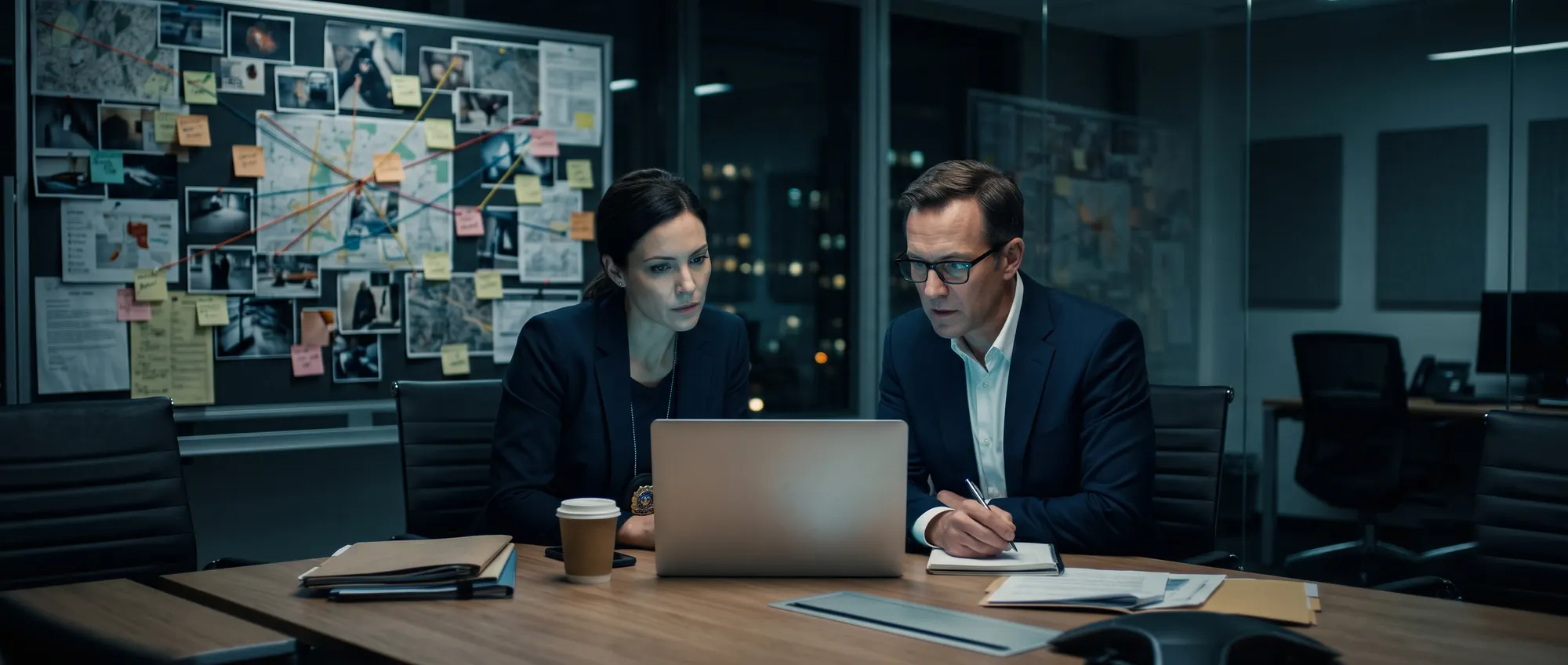
Know what a phone extraction or location record actually shows, and where it can be challenged.
Prepare, organize, and manage digital evidence so nothing surprises the trial team.
Work mobile, video, IoT, and location evidence and draft warrant language that holds.
No prior technical or forensics experience required, just basic computer literacy.
Modern investigations turn on the devices people carry, drive, and live with. In DFE-101 you examine the evidence domains that show up in real cases, in a safe browser-based virtual lab.
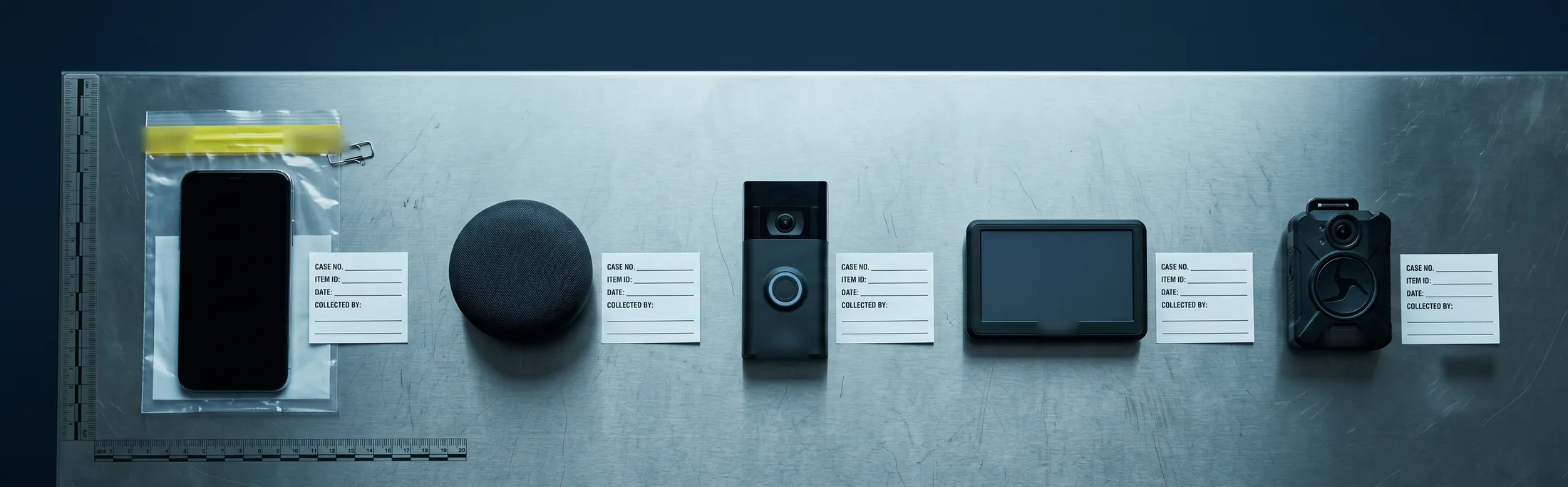
Call logs, messages, photos, app data, and location history from smartphones and tablets.
CCTV, body cameras, dashcams, and doorbell footage: metadata, timestamps, and authentication.
Smart speakers, video doorbells, and home automation logs, and where that data actually lives.
License plate readers, GPS tracking, and cell-site location data, including the law that governs them.
A dedicated module covers AI and emerging technology: AI-assisted analysis, deepfake detection, and the reliability of AI-generated evidence.
DFE-101 follows digital evidence through its entire life cycle, so you understand not just what the evidence is, but how it holds up when it matters most.
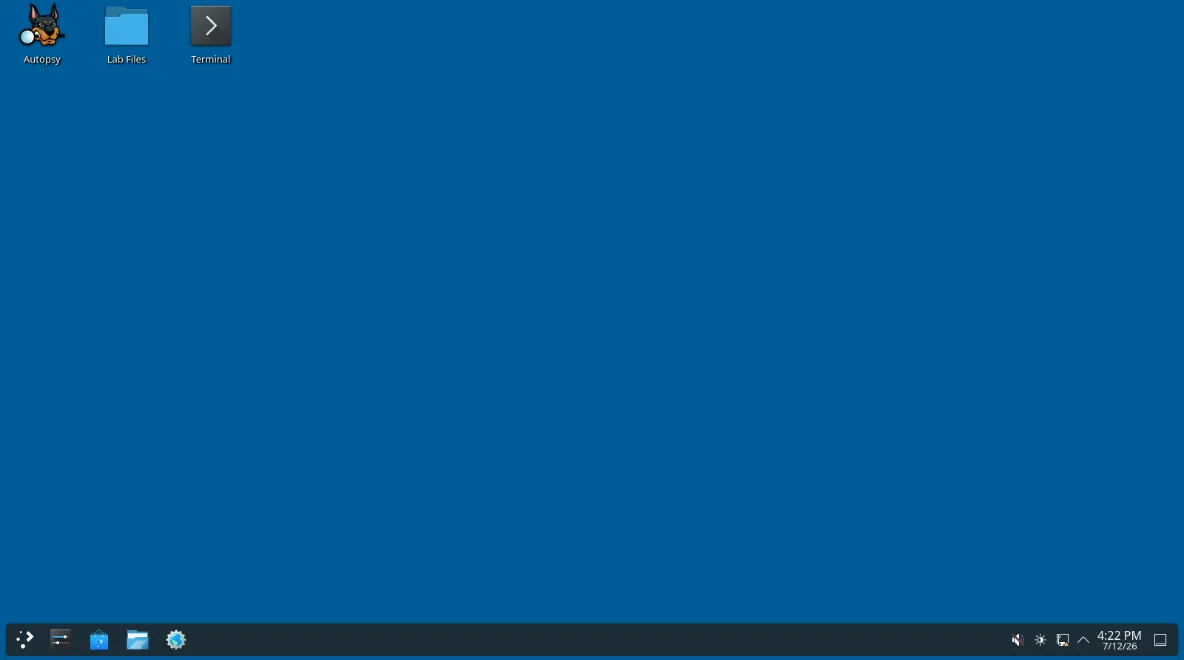
You work in a real forensic workstation that runs in your browser. Nothing to install.
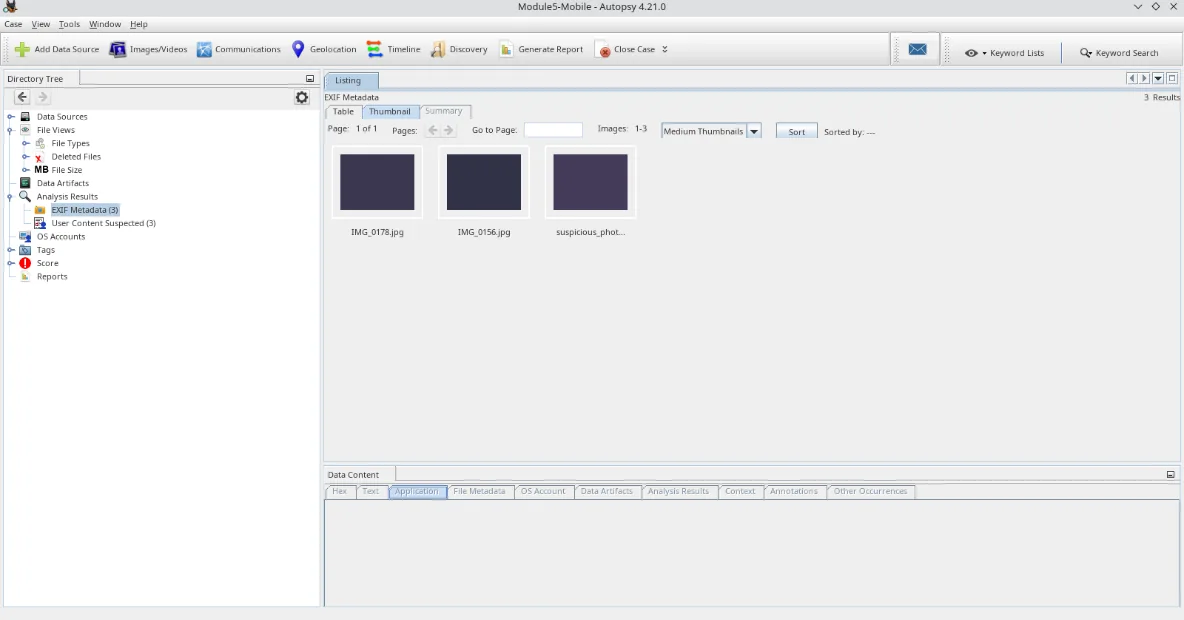
All evidence is fictional and synthetic. Labs run fully sandboxed, with no real case data.
Each module pairs plain-language instruction with guided and applied lab exercises and a quiz. The course finishes with an end-to-end case simulation.
DFE-101 maps to foundational objectives from digital-forensics certifications including IACIS CFCE, ISFCE CCE, GIAC GCFE, and EC-Council CHFI, and to CompTIA Security+. It also aligns with the NICE Framework, NIST SP 800-86, SWGDE standards, and DOJ electronic-evidence guidance.
Maps to foundational objectives. This course is not a certification exam or a guarantee of certification.
No. DFE-101 is a foundational course written in plain language for justice-system professionals. You need only basic computer literacy: opening files, using a web browser, and navigating a desktop.
Mobile devices, video (CCTV, body cameras, dashcams, and doorbells), IoT and smart-home devices, and vehicle and location data (license plate readers, GPS, and cell-site location). A dedicated module covers AI and deepfake evidence.
It maps to foundational objectives from IACIS CFCE, ISFCE CCE, GIAC GCFE, and EC-Council CHFI, and to CompTIA Security+. It also aligns with the NICE Framework, NIST SP 800-86, SWGDE standards, and DOJ electronic-evidence guidance.
About 22 to 26 hours across 12 modules. You work with Autopsy, ExifTool, MediaInfo, and SQLite Browser in a forensic workstation that runs in your browser, with nothing to install and no real case data.
Yes. You can teach it in a class or buy access for a team. Use the 'Teach this in a class' option to set up a class, or contact us about team and bulk options.
NDG Online runs the lab environment right in your browser, with no installs and no hardware. Network Development Group has built lab-based IT training for educational institutions, government, and industry since 1999. DFE-101 uses NDG's "practice as you read" approach: coursebook, labs, and assessments together.
Training a team or a department? We have options for that too.